
Blog

GudenkaufUnderground Blog

Practical guides on directional drilling, utility crossings, drainage and septic care for homes, farms and businesses in Eastern Iowa.

GudenkaufUnderground Guides to Directional Drilling

Directional Drilling vs. Open Trenching: Which Is Right for Your Project?
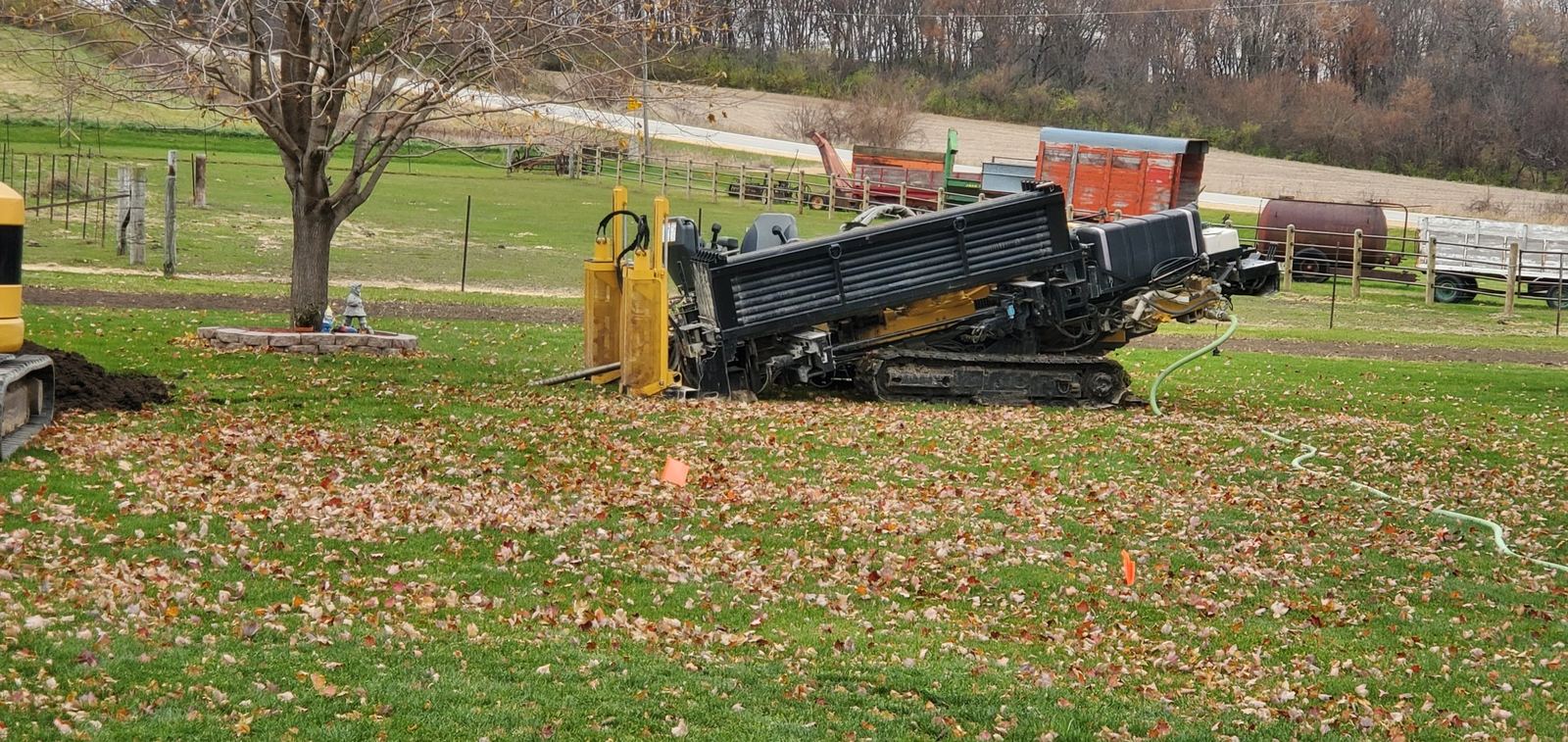
Directional drilling rig boring under a lawn in Eastern Iowa

When a new water line, electrical feed or conduit has to get from point A to point B, there are two basic ways to do it: dig a trench along the whole path, or bore underneath with a directional drill. Both methods work. The better choice depends on what sits between those two points.

Directional drilling (also called horizontal directional drilling, or HDD) launches a steerable drill head from an entry point, guides it along a planned path below the surface, and then pulls the pipe or conduit back through the finished bore. Only the entry and exit points are disturbed. That makes it the clear pick when the route crosses a driveway, sidewalk, road, mature trees, landscaping or a finished lawn you don't want torn up.

Open trenching is often faster on open ground where nothing on the surface needs protecting, such as a long run across a pasture or a new-construction lot that will be graded anyway. A trencher can lay conduit or line quickly, and the trench is backfilled as the job goes.

Many projects use both: trench the open stretches and bore the crossings. When you call, describe the whole route, including what is on the surface. That is usually enough to tell which method, or which mix, saves the most time and restoration.
Running Fiber Optic and Electrical Conduit Under Driveways and Roads

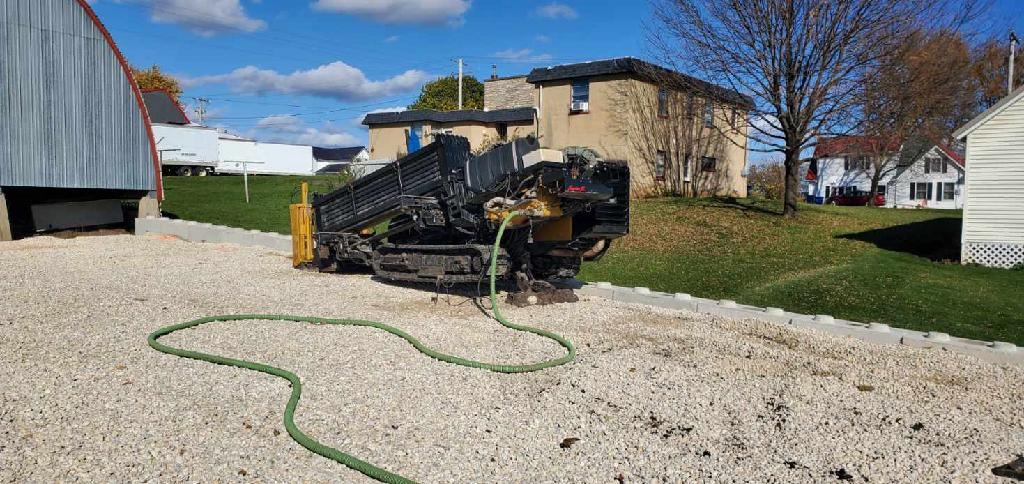
Directional drill staged on gravel for a conduit bore near a home

Rural broadband buildouts, new shops and outbuildings, backup generators and EV chargers all have one thing in common: they need a cable from somewhere else, and there is usually a driveway or road in the way. Boring conduit underneath is the cleanest way to get there.

A typical conduit bore goes like this:

  • Locates first. Iowa One Call (811) is contacted so existing gas, power, phone and water lines are marked before any work starts.
  • Plan the path. Entry and exit points, depth and clearance from other utilities are set based on the locates and the surface you're crossing.
  • Pilot bore and pullback. The drill head is steered to the exit point, then the conduit is pulled back through the bore.
  • Hand-off. Your electrician or provider pulls wire or fiber through the conduit and makes the connections.

Coordinating timing with your electrician or internet provider ahead of time keeps the project moving. Crossings of public roads may also need approval from the city or county, so check that early.

GudenkaufUnderground Tips for Farms, Drainage and Septic

Planning Drainage Tile Crossings and Culvert Pipe on Farm Ground

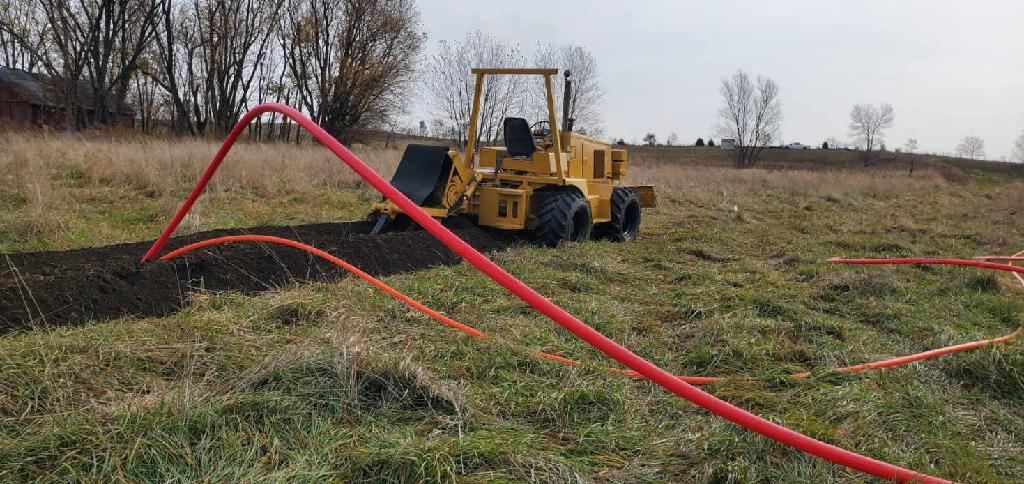
Trencher installing pipe across a farm field

Eastern Iowa farm ground depends on drainage. When a tile line has to pass under a field road, a lane, a waterway or a public road, directional drilling can carry it across without cutting the surface. Bores up to 15 inches in diameter cover most tile crossings and many culvert replacements.

A few things make these jobs go smoothly:

  • Know your grade. Tile only works if it keeps its fall. Share the elevations at both ends of the crossing so the bore can hold the needed slope.
  • Size for the future. If the upstream system might be expanded, a larger pipe through the crossing now is cheaper than a second bore later.
  • Time it with the season. Scheduling after harvest or before planting keeps equipment out of standing crops.
  • Check with the road authority. Crossings under county or city roads typically require permission before work begins.

For long runs across open fields, trenching can be the more economical way to lay tile or pipe, with drilling saved for the crossings.

How Often Should You Pump Your Septic Tank in Iowa?

Most household septic tanks should be pumped every three to five years. The right interval for your home depends on the tank size, how many people live there, and how much water the household uses. A small tank serving a large family needs attention more often than a large tank serving one or two people.

Signs your tank may need pumping sooner:

  • Slow drains or gurgling in sinks, tubs and toilets
  • Sewage odors in the house or yard
  • Unusually green or wet spots over the drain field
  • Water or sewage backing up into the lowest drains in the house

Regular pumping removes the sludge and scum that build up in the tank before they can move into the drain field, which is the most expensive part of a system to repair. Keeping a record of pump dates and tank size makes scheduling easy.

Iowa also requires a time-of-transfer inspection for most properties served by a septic system when the property is sold, so buyers and sellers should plan for it. If your system is failing or you're building new, septic installation can be handled along with the excavation the job requires.

Questions? Ask GudenkaufUnderground

Give Terry a call!

(563) 920-8295